


 English
 عربى
عربى
Flared tube fittings (also known as flare fittings) are critical components in fluid systems. Their sealing performance depends on the accuracy of the flare angle, the flatness of the sealing surface, and the overall dimensional consistency. Any deviation can cause leaks, affecting system reliability.
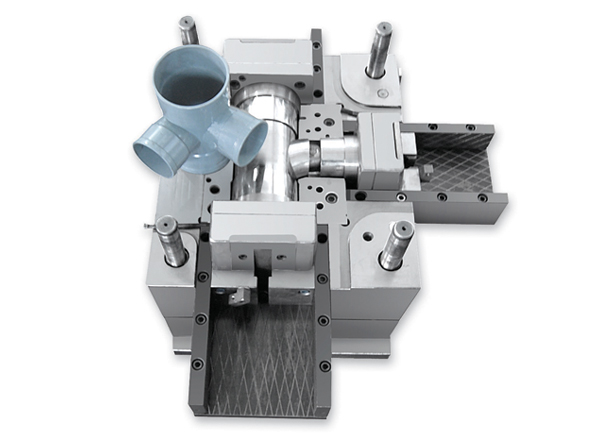
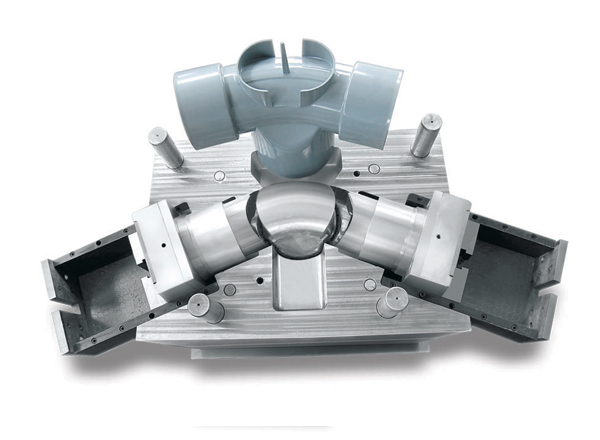
Mold design and manufacturing must address several precision aspects:
1.High‑precision cavity machining – The flare geometry is typically machined using 5‑axis CNC to maintain angle tolerances within ±0.5° and surface roughness Ra ≤ 0.4 μm. This ensures a smooth, flat sealing surface.
2.Tight fit for slide cores – For fittings with side holes or threads, slide cores must move smoothly with minimal clearance (typically ≤ 0.02 mm) to avoid burrs that could compromise sealing.
3.Gate location optimization – Mold flow analysis helps place gates so that weld lines do not occur on the sealing face. This maintains material integrity at the critical sealing zone.
Common cavity layouts are 4‑cavity or 8‑cavity. During trial runs, critical dimensions (flare outer diameter, angle, length, etc.) are measured using coordinate measuring machines (CMM) to verify part‑to‑part consistency. With proper design and machining, the finished fittings consistently meet leak‑test requirements, reducing field failure rates for equipment manufacturers.
Furthermore, the mold cooling system must be designed to ensure uniform temperature distribution around the flare area, because differential cooling can cause slight distortions that affect sealing. Many manufacturers also employ in‑mold pressure sensors to monitor cavity pressure, allowing real‑time adjustments to compensate for material viscosity variations. The cavity and core materials for pipe fitting molds are typically made of 718, NAK80, or higher-grade mold steels. High-hardness die steel is required, generally achieving a hardness of 35 HRC. Should clients require even better grades of material, the specific mold steel will be procured strictly in accordance with their individual requirements. After production, parts are typically tested with a leak tester at a specified pressure (e.g., 5 MPa) to confirm zero leakage. By paying close attention to these details, mold makers can deliver tools that produce flared fittings with consistent sealing performance, which is a key requirement for OEMs in the hydraulic and refrigeration sectors.
 86 - 576 - 84332017
 86 - 13634093909
 No. 85 Guangshun Street, Xinqian Street, Huangyan District, Taizhou City, Zhejiang