


 English
 عربى
عربى
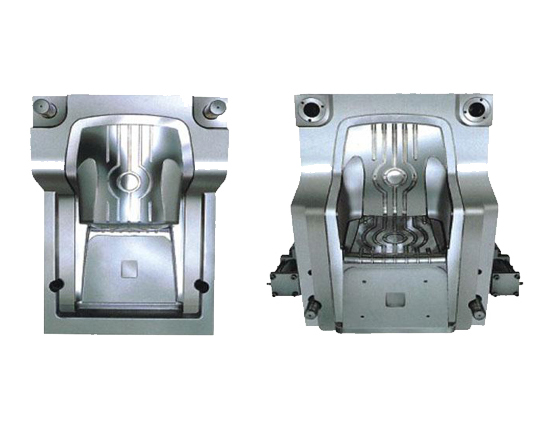
In the mass production of plastic chairs, stools, and similar daily‑use items, flash (or burrs) is a frequent quality concern. Parts with flash require manual trimming, which increases labor costs and extends production turnaround times. Reducing flash through better mold design is therefore a key focus for many manufacturers.
Flash typically occurs when the injection pressure exceeds the clamping force, causing molten plastic to escape through gaps in the parting line. It can also result from poor alignment or worn mating surfaces. To address this, mold designers often adopt the following measures:
1.Parting line hardening – Laser quenching or nitriding treatment can raise surface hardness to about HRC 50 or more. This helps maintain the original fit over long production runs, reducing wear‑related flash.
2.Precise guiding and locating systems – Adding robust guide pins and bushings improves repeatable alignment between the moving and fixed halves, keeping the parting line flush and minimizing offset‑induced flash.
3.Proper venting design – Vent gaps of 0.01–0.02 mm at melt‑convergence areas relieve trapped air, preventing abnormal pressure spikes that can force flash.
Material selection also plays a role. For high‑volume chair molds, common steels include P20 (hardness around HRC 25, suitable for up to 200,000 cycles) and 718H (around HRC 30, for longer service life). Chair molds are often built as 2‑cavity or 4‑cavity tools, using either hot runner or cold runner systems. With thoughtful design, flash can be noticeably reduced, resulting in less manual finishing work and more stable production output.
Beyond these technical measures, it is also important to consider the influence of injection parameters. For instance, clamping force should be set appropriately—typically 10–20% higher than the calculated cavity pressure to ensure a secure seal. In addition, regular maintenance of the parting surface, such as cleaning and periodic re‑hardening, can prolong the mold’s flash‑free life. Many chair manufacturers report that after implementing these improvements, their post‑molding trimming time drops by roughly 30–40%, directly contributing to higher daily output and lower per‑part labor cost. For customers in the furniture and public seating industries, investing in a well‑designed flash‑reduction mold pays off quickly through reduced scrap and faster delivery.
 86 - 576 - 84332017
 86 - 13634093909
 No. 85 Guangshun Street, Xinqian Street, Huangyan District, Taizhou City, Zhejiang