


 English
 عربى
عربى
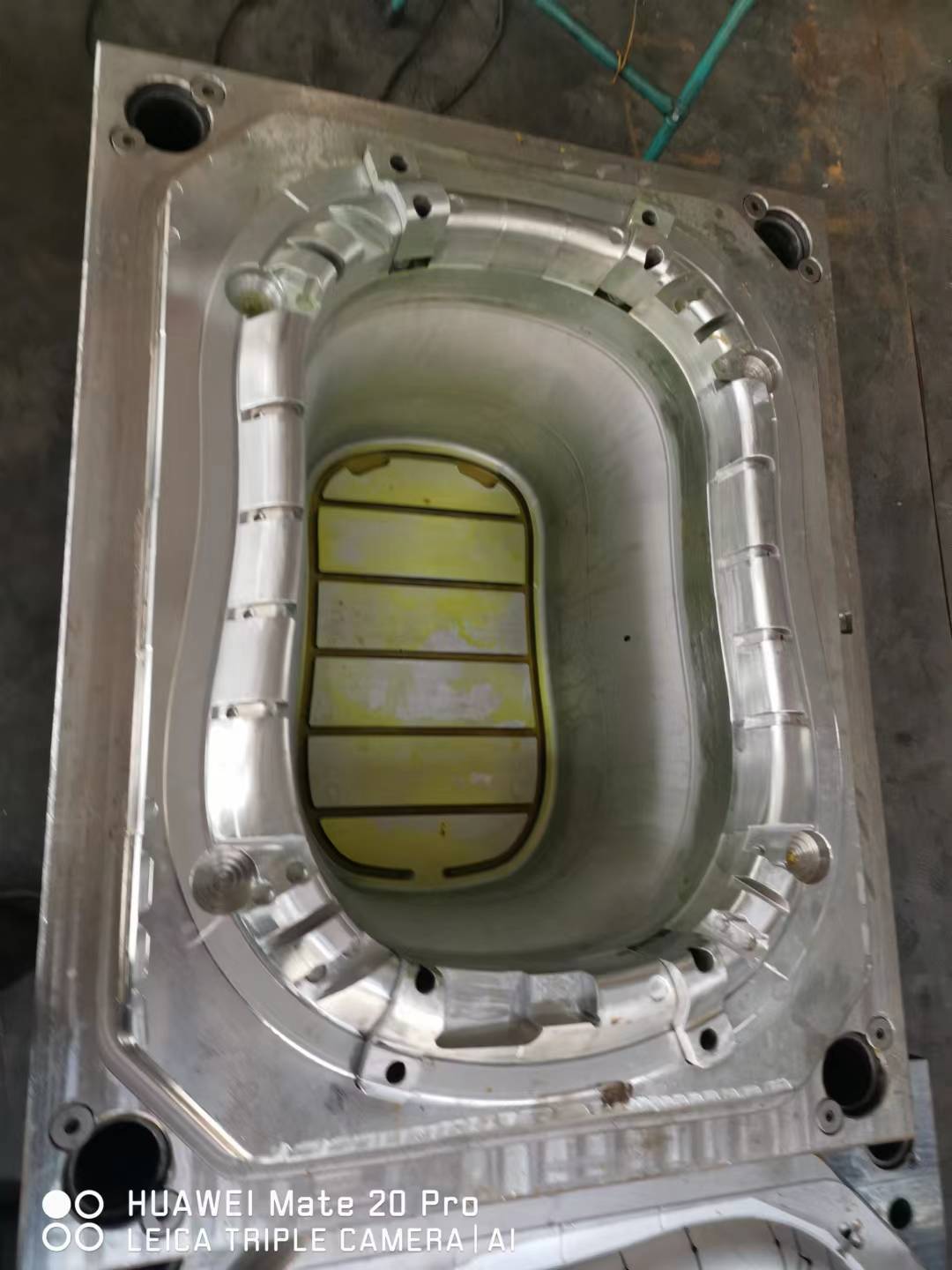
Our company specializes in custom manufacturing of plastic bathtub molds in various styles. Below is a detailed description of our manufacturing process for plastic bathtub molds.
Mold Material
The cavity and core of plastic bathtub molds are generally made of P20 grade steel or above. This type of mold steel achieves a hardness of approximately 25 to 30 HRC. For customers requiring higher performance, we can procure better grades of mold steel according to specific requirements.
Mold Design Software
We use UG, CAD, PRO/E, and the Moldflow simulation software for mold design. Moldflow analysis is essential for optimizing runner layouts to ensure balanced melt distribution, which is critical for large bathtub molds.
Mold Processing Equipment
Our main processing equipment includes radial drilling machines, surface grinders, gantry CNC milling machines, engraving and milling machines, deep‑hole drilling machines, and EDM machines. For mold trials, we use Haitian injection molding machines ranging from 500T to 1,000T, depending on the part size.
Ejection System
The ejection system for bathtub molds uses a combination of ejector pins and pneumatic valves. All ejector pins are made of SKD61 high‑quality steel. The ejection system is linked to the injection molding machine's ejector mechanism to ensure smooth ejection and resetting. Electronic limit switches are added to ensure reliable production.
Cooling System
For plastic bathtub molds, cooling efficiency directly affects production output and, consequently, the unit cost of the product. The typical molding cycle for a bathtub is approximately 35 to 45 seconds, depending on wall thickness and material.
Gate System
The gate system for bathtub molds typically uses hot runner systems with large gate openings. For higher‑quality requirements, valve‑gated hot runner systems may be used, depending on the customer's choice and budget.
Venting System
Proper venting is critical in bathtub molds. Poor venting may result in burning, short shots, or weld line defects. Given the large cavity size and complex geometry, the venting system must be carefully designed to allow trapped air to escape during filling.
Surface Hardness Treatment
Surface hardness treatment is important for bathtub molds. The mold surface is typically electroplated to improve wear resistance and corrosion resistance, extending the service life of the mold.
Mold Life
The service life of a bathtub mold depends on the steel grade used. P20 steel, with a hardness of approximately 25 HRC, typically provides a mold life of around 300,000 cycles. Higher‑grade steels can extend the mold life accordingly.
Shipping and Packaging
Before shipment, the mold surface is treated with anti‑rust protection, and safety locks are installed to secure the mold. The mold is then wrapped in plastic film. For large bathtub molds, cylinders and slide assemblies may be disassembled to reduce shipping volume and lower transportation costs for the customer.
Production Lead Time
Bathtub molds are large‑sized tools. The typical production lead time is approximately 95 to 110 days, depending on the complexity of the design and the processing requirements.
The above is a brief overview of our plastic bathtub mold manufacturing process. For more information, please contact us.
 86 - 576 - 84332017
 86 - 13634093909
 No. 85 Guangshun Street, Xinqian Street, Huangyan District, Taizhou City, Zhejiang