


 English
 عربى
عربى
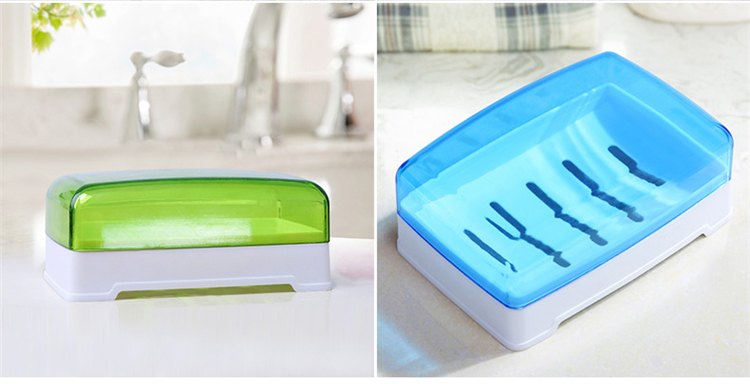
Soap dishes are common household plastic products that require consistent dimensional accuracy and surface quality. The injection mold design for soap dishes must address several factors including cavity layout, gate placement, cooling efficiency, and ejection system design.
Cavity Layout and Number of Cavities
For soap dish molds, the number of cavities is determined by the required production volume and the available injection molding machine capacity. Common configurations include single-cavity, two-cavity, and four-cavity layouts. A four-cavity arrangement is frequently used for medium‑volume production, balancing output efficiency with mold manufacturing cost. The cavity arrangement must consider the mold base size, runner layout, and balanced filling to ensure consistent part quality across all cavities.
Gate System Design
The gate system directs molten plastic from the injection molding machine nozzle into the cavity. For soap dish molds, the gate location must be selected to achieve balanced filling and minimize visible gate marks on the product surface. Side gates or submarine gates are commonly used depending on the part geometry and aesthetic requirements. Flow simulation software such as Moldflow is often employed during the design phase to analyze filling patterns, optimize gate dimensions, and predict potential issues such as weld lines or air traps.
Cooling System
Efficient cooling is essential for maintaining dimensional stability and minimizing cycle time. The cooling channels are typically arranged to follow the contour of the cavity and core, providing uniform heat extraction across the part surface. For soap dish molds, the cooling system design must account for the relatively thin wall sections and the need to prevent warpage. Cooling channel diameter and spacing are selected based on the part geometry and the thermal conductivity of the mold steel.
Mold Steel Selection
The selection of mold steel depends on the expected production volume and the material being molded. For soap dish production, pre‑hardened steels such as P20 or 718H are commonly used, offering good machinability and wear resistance for moderate production runs. For higher‑volume production, hardened steels may be specified to extend mold life.
Ejection System
The ejection system must remove the finished part from the mold without causing deformation or surface damage. For soap dish molds, ejector pins are typically arranged to apply force evenly across the part surface. The number and placement of ejector pins are determined by the part geometry and the ejection force required.
 86 - 576 - 84332017
 86 - 13634093909
 No. 85 Guangshun Street, Xinqian Street, Huangyan District, Taizhou City, Zhejiang